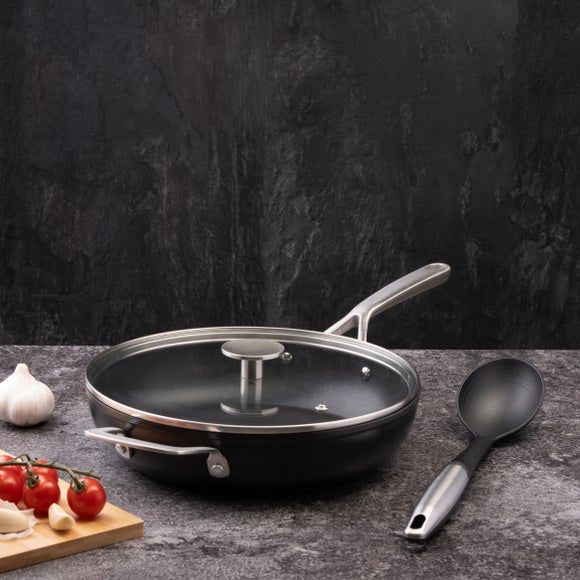
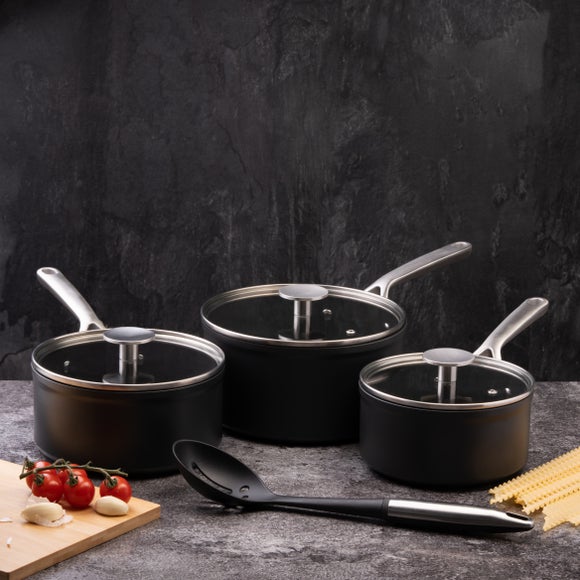

Hard Anodised Aluminium 3 Piece Pan Set
£74
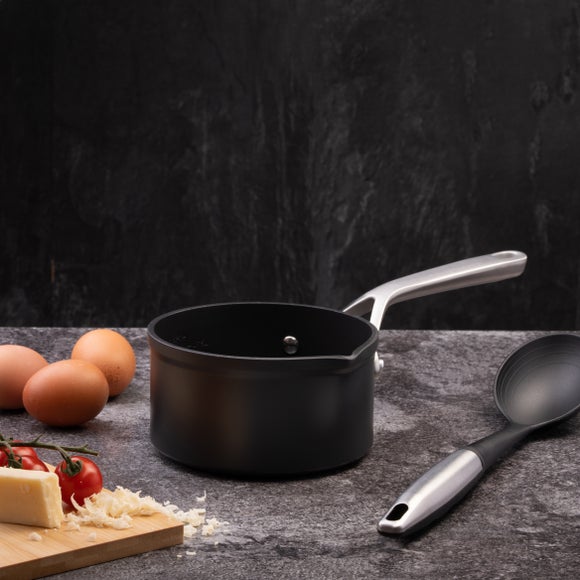
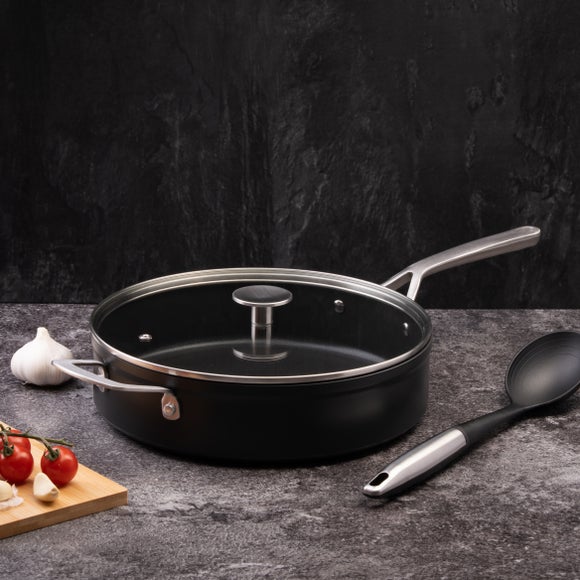
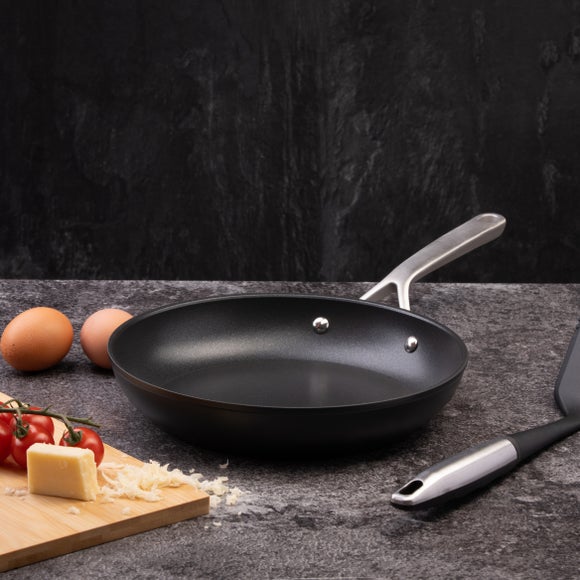
With so many options, materials and hob types to consider, we're here to help you find the pots and pans that suit your kitchen and your cooking. Below we cover everything from what is an induction pan to which material is right for you. We've also answered some of the most common questions on caring for your cookware, so you can keep it performing at its best for years to come.
With so many different types of pots and pans to choose from, here is a handy guide on the best uses for each pan type.
Frying pans: Best for frying, searing, browning and sautéing.
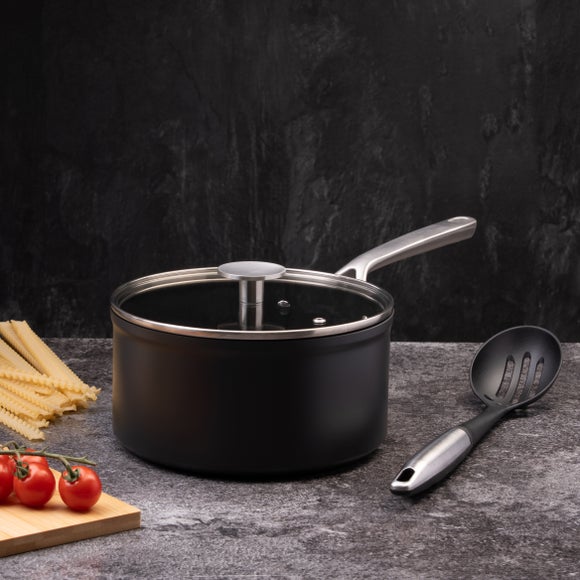
Saucepans: Best for heating liquids, cooking sauces, vegetables, rice and pasta.
Milk pans: Best for heating milk, preparing porridge, sauces and smaller portions.
Sauté pans: Best for sautéing, shallow frying and one-pan meals; straight sides help retain liquids.
Griddle pans: Best for cooking meat and vegetables with raised ridges that create grill marks.
Wok or stir-fry pan: Best for stir-frying, steaming and deep frying.
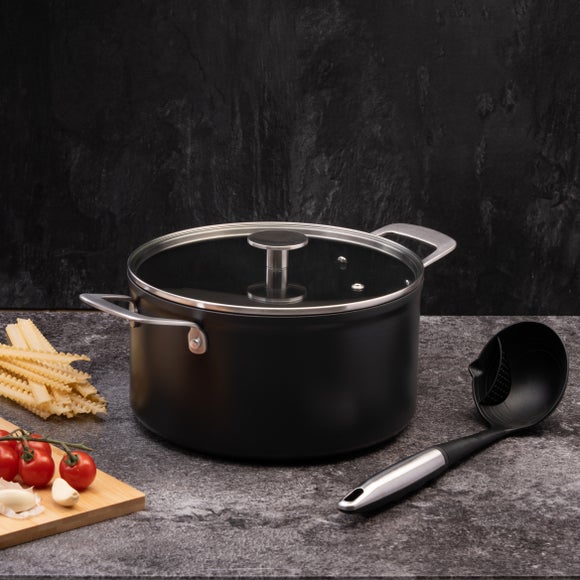
Stock pot: Best for soups, stocks, stews, pasta and batch cooking.
There is no single best material for every hob. The most suitable choice depends on the cooking task, desired heat response and whether induction compatibility is required.
Aluminium: Aluminium pots and pans are the more lightweight option in our range. They are excellent heat conductors, so heat up quickly. We also have a growing range of forged aluminium and hard anodised aluminium pots and pans which offer the same great performance with even greater durability.
Stainless-steel: Durable, non-reactive and corrosion resistant, stainless-steel pots and pans are a popular and long lasting choice as they typically don’t have a non-stick coating that can degrade over time.
Carbon steel: If you are looking to cook up a stir fry, then a carbon steel pan is a good choice. They heat quickly, work at high heat and develop a natural seasoning over time.
Cast iron: Cast iron pots and pans have excellent heat retention, work at high temperatures and can last decades with proper care.
How to best care for and use your pans will differ depending on the material and finish of the pans.
Non-stick pans are the easiest of our range to keep clean as the non-stick coating makes washing up much easier. While most of our non-stick pans are dishwasher safe, we always recommend hand washing to extend the lifespan of the pan. Be sure to use non-abrasive cleaners and stick to wooden, nylon and silicone utensils when cooking to avoid damage to the coating.
Much like our non-stick pans, most are marked as dishwasher safe, but we recommend hand washing to help maintain the appearance of the cookware. Be sure to use non-abrasive cleaners and stick to wooden, nylon and silicone utensils when cooking to avoid damage to the surface.
To get the best out of your uncoated stainless-steel pots and pans when cooking, gently pre-heat the pan over a medium heat and then use the water drop test. Sprinkle a few drops of water into the pan and if properly pre-heated, the droplets will bead up and glide across the surface instead of instantly evaporating. This means the pan is ready for cooking. Wait until properly heated before adding your oil or butter and then place the food in once the oil is hot. Low to medium heat is best suited when using these pans.
Cast iron pans need hand washing and it is advised to soak burnt-on food in warm soapy water before cleaning. Be sure to avoid using abrasive cleaners as they may damage the enamel coating. Before pre-heating, it is recommended that a small amount of oil be wiped round the interior of the pan and to avoid damaging the enamel coating, increase the heat gently rather than instantly going to the intended heat. Avoid using excessive heat, which will cause food to burn and stick to the pan. Do not allow cast iron pans to boil dry to protect the surface.
Induction is a method of cooking that uses an electromagnetic field to heat compatible cookware directly, rather than heating the hob surface first. Induction pots and pans heat up quickly, evenly, and are generally more energy efficient than other types of pans. Top tip for using induction pans: Ensure the diameter of the pan matches the size of the induction zone on your hob. If the base is too small, the hob may not activate.
Both non-stick and uncoated cookware have their own benefits, so the right choice depends on the types of food you cook and how you like to cook. Non-stick pans are ideal for effortless food release, low fat cooking because less oil or fats are needed, and they are easier to clean. While most of our range features a non-stick coating, we do also have a range of pans with a ceramic coating that performs in a similar way.
Yes, we offer guarantees on our Dunelm branded pots and pans. The length of the guarantee differs by product and ranges from 3 years up to 25 years. The guarantees are clearly marked on packaging in store and also online. Products from other brands often also come with guarantees of different lengths, but this will also be made clear in a similar way.
Pan is a general term for cookware used on the hob. A saucepan is a specific type of pan that features straight sides and a handle and in many cases comes with a lid.
You can place hot pans directly on glass chopping boards and worktop protectors made from toughened glass. They are generally designed to withstand heat often up to 180°C to 250°C, however you should always check the manufacturer's care instructions before doing this.
No cookware is proven to make food healthier. Using non-stick or ceramic coated pans with less or no oil could make food better for you, but everything will depend on how you cook your food.
We have over 5,000 reviews on our pots and pans alone from our customers with an average rating of 4.5 stars. Bazaarvoice hosts and independently moderates all of our product reviews and we are proud to display the BV Authentic Reviews Trustmark. We will never pay for reviews, have no ability to manipulate or edit reviews, and all reviews on Dunelm.com are 100% genuine feedback left by our customers.